


Also available in: Deutsch
Shinjuku is a popular neighborhood in Tokyo and offers many activities as well as several sights. Until 1920, Shinjuku was its own city, but it was then incorporated into Japan’s capital. The district’s current form has existed since 1947, and since 1991, Shinjuku has even been the administrative seat of the Tokyo Prefecture.
Sights and Things to Do in Shinjuku, Tokyo

In Tokyo, Shinjuku is especially well known for the entertainment district Kabukicho and the Robot Restaurant. But those are far from all of Shinjuku’s things to do, because the neighborhood has much more to offer. In this article, we share a few tips for Shinjuku and show you why a visit is worth it.
Accommodation in Tokyo – Our Hotel Tip
The selection of hotels in Tokyo is huge, and it’s always a good idea to have a metro station close to your hotel. the Hotel SUI Akasaka by Abest and can highly recommend it. We even stayed there a second time because we really liked it overall.
Rooms in Tokyo are usually much smaller, but they offer everything you need. At the Hotel Sui Akasaka by Abest, they are equipped with a coffee machine, kettle, refrigerator, air conditioning, bathroom with modern Japanese toilet, tablet, TV, and reliable, free Wi-Fi. There are also USB ports and sockets for non-Japanese plugs. Nothing is left to be desired. Another highlight is the roof terrace, and there are other amenities such as washing machines and a directly connected café.

Popular neighborhoods to stay in Tokyo include Shinjuku, Akihabara and Asakusa. More hotels in other parts of Tokyo can be found here.
1. Omoide Yokocho
Omoide Yokocho, also known as Memory Lane, is a small bar district in Shinjuku, not far from Shinjuku Station. Omoide Yokocho has existed since the 1940s and was initially an illegal place to drink. After World War II, the area became increasingly well known for its hostess bars and izakayas at the time.
The izakayas still exist today and are small bars where you can get yakitori skewers, usually made from chicken, and beer. However, only a few people fit inside, and often the izakayas are already fully occupied with 5-6 people, which is part of what makes the atmosphere. You can also explore Omoide Yokocho on a bar crawl.

Fun Fact: Omoide Yokocho is also called Piss Alley. This is because after World War II, many people came here to drink, but there were not enough restrooms. So guests relieved themselves by the nearby train tracks or simply in a quiet corner.
2. Godzilla Head
Right in the middle of Kabukicho, a large Godzilla head towers over the high-rises. You can find it, fittingly, on Godzilla Road at Hotel Gracery. Many visitors come here for photos they take from the street, making the Godzilla Head one of Shinjuku’s sights.
You can also see Godzilla up close, and there are two ways to do it: either you stay at Hotel Gracery or you go to the lobby on the 8th floor to Cafe Bonjour, on whose terrace Godzilla stands.

By the way, from 12.00 PM to 8.00 PM, you can see a small Godzilla show every hour on the hour. Then music plays, and as he roars, smoke and light come out of his mouth. A must-see for Godzilla fans.
3. Samurai Museum
Are you interested in Japan’s history, and especially that of the samurai? Then a visit to Shinjuku’s Samurai Museum is perfect for you. It’s located in Kabukicho (see the next point) and offers guided tours through the museum every 15-20 minutes.
From authentic samurai armor to weapons and other accessories that are between 200 and 400 years old, you’ll get a closer look at the life of the samurai. This way, you’ll learn quite a bit of history while you look at the samurai artifacts. At the end, you can also take photos in a kimono or samurai outfit. Admission is 1,800 Yen, including the guided tour. You can also book tickets in advance online.
4. Kabukicho
Kabukicho is the red-light and entertainment district in Shinjuku. While things are fairly quiet during the day, the streets and alleys fill up in the evening when the colorful neon signs light up. In addition to various restaurants, you’ll find mostly bars, clubs, karaoke spots, pachinko parlors, as well as love hotels and adult-oriented establishments.


To get even more insights into the Kabukicho district in Shinjuku, the tour Tokyo: Evening Walk Through Shinjuku is a great option. That way, you definitely won’t miss anything.
5. Robot Restaurant
If you like something crazy or over the top and you’re open to Japanese shows, then you should visit the Robot Show at the Robot Restaurant. It’s one of Shinjuku’s main attractions. It’s not really a restaurant, but the 90-minute show is a real experience.
The restaurant’s design alone is unique, and once the show starts and everything is immersed in colorful neon lights and chaotic sound effects, it feels like a completely different world. However, don’t expect actual robots, because it’s mostly people in various costumes like samurai, unicorns, dinosaurs, etc., putting on an elaborate show for you.

Tickets for the Robot Show cost 7,500 Yen and are best booked in advance. Otherwise, you might not be able to get a ticket for your preferred showtime. The Robot Show is performed four times daily at 04.00 PM, 05.55 PM, 07.50 PM, and 09.45 PM.
6. Game Center
In the area around Shinjuku, just like in many other neighborhoods in Tokyo, you’ll find countless game centers and pachinko parlors. One of the most well-known is the SEGA Game Center, which you can reach from Shinjuku Station in about a 3-minute walk if you take the west or south exit. But if you walk around Shinjuku a bit, you’ll find many more game centers.

At the SEGA Game Center, which spans multiple floors, you’ll also find games that are familiar back home, like Mario Kart. Of course, we tried it right away! It’s also great for taking a break when your legs are a bit sore from all the sightseeing.

7. Golden Gai
Golden Gai is another small bar district in Shinjuku. Here, tiny bars and izakayas line up next to each other, and each one only has space for a very small number of people. In some bars, you do have to pay an entrance fee (starting at 500 Yen), but it’s worth it to experience this atmosphere at least once.

If you want to take a few photos of the Golden Gai district, you’ll need to do it during the day. In the evening, photography is prohibited so visitors don’t feel disturbed. If you don’t feel comfortable going into the izakayas on your own, which can sometimes be difficult due to the bars’ limited English, we recommend the Shinjuku Golden Gai Food Tour.
8. Tokyo Metropolitan Government
The Tōkyō Tochō, as the Tokyo Metropolitan Government is called in Japanese, is the administrative seat of Tokyo mentioned in the introduction and is located in Shinjuku. It stands out thanks to its two 243-meter-high towers, each of which has an observation deck for visitors at 202 meters. Until 2007, it was even the tallest building in Tokyo.

There is the North Observatory, which is open longer and is therefore popular for nighttime views, and the South Observatory. On the first and third Tuesday of each month, the observation decks are closed. Otherwise they are open from 09.30 AM to 11.00 PM and you can visit them for free.
Tip: It’s best to check in advance on the official website, as there are sometimes renovations or different opening hours due to holidays.
9. Shinjuku Gyoen Park
Not far from Shinjuku Station is Shinjuku Gyoen Park, which was opened to the public in 1949. The park is a popular local recreation area, but visitors to Tokyo also like to stop by. In addition to a Japanese garden, it also has an English and a French garden.
The view of Shinjuku’s skyline with the park in the foreground is especially popular. There are various spots where you can relax on the lawns and get a bit of distance from the big city. Shinjuku Gyoen Park is also very popular in fall, when all the leaves change color beautifully, and of course during cherry blossom season.

The park is open daily from 09.00 AM to 04.30 PM (October 1 to March 14), otherwise even until 06.00 PM and sometimes 07.00 PM (July 1 to August 20). Admission is 500 Yen, but it’s worth it if you like spending time in parks.
Tokyo: Tours and Tickets
Do you prefer to travel with a guide who knows the area very well? Then we recommend a guided tour with a local. This way you can get to know Tokyo Odaiba in a completely different way. GetYourGuide offers a wide selection of exciting tours for Odaiba and Tokyo.
How to Get to Tokyo
The international trip to Tokyo does not offer many options, since Japan is an island country. So the plane is usually the only option to get to the Japanese capital. Tokyo has two airports, Narita and Haneda Airport.
There are direct flights to Tokyo from all over the world as well as Europe or other Asian countries. Narita Airport serves most international flights, but Haneda also handles some of them. However, the majority of flights at Haneda Airport are domestic flights. For a good overview of times, prices and airlines, we can recommend Skyscanner.
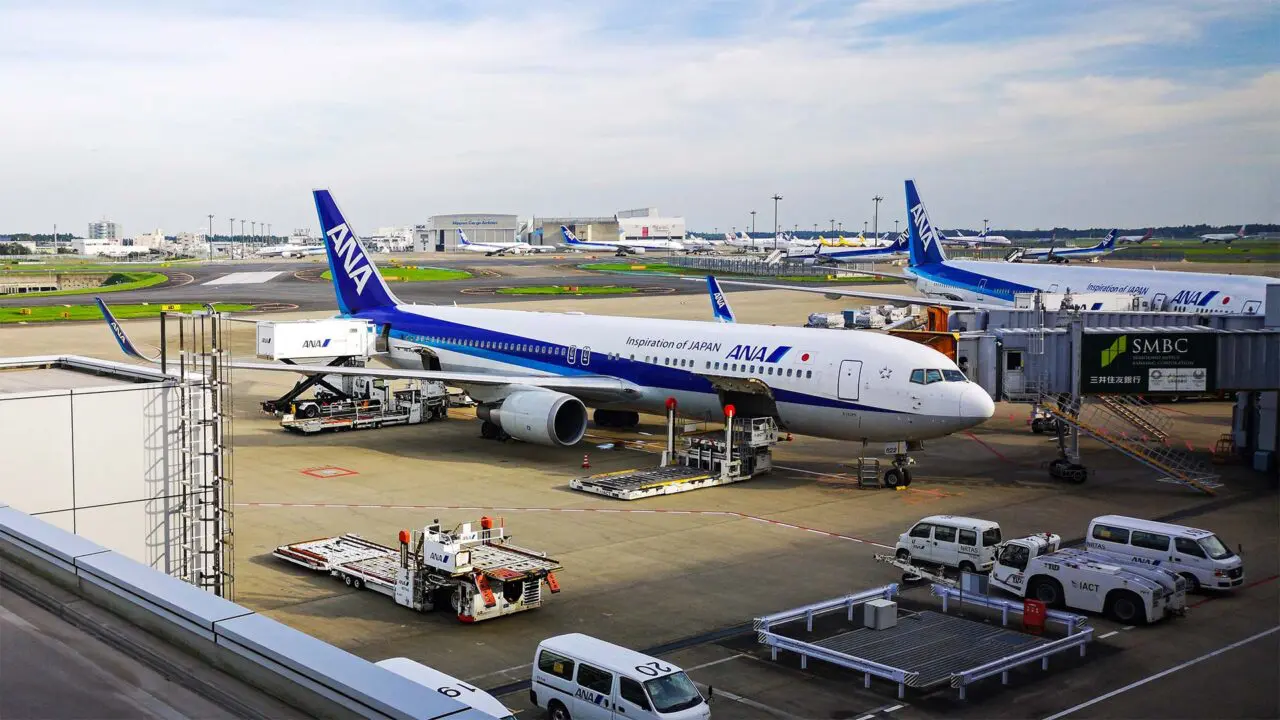
Note: There are also ferry connections, e.g. from China or South Korea to Japan, but not directly to Tokyo. There you would have to travel to Tokyo via Kyushu or Osaka. You can find more information at 12go.asia.
Other options if you are traveling to Tokyo within Japan are the bus and train. The Shinkansen express trains are the most popular, but there are also many other trains to choose from. If you are in Japan a little longer, then a Japan Rail Pass is worth it, because most routes within Japan can be covered quickly and easily by train. Absolute recommendation!
Have you visited the Shinjuku district in Tokyo? Do you know any other things to do in Shinjuku? We look forward to your comments.
Photos: Photo 7 (Robot Restaurant): TK Kurikawa/shutterstock.com
