


Also available in: Deutsch
When the plane began its descent in December, I felt like I was in another world. The winter jacket could be tossed into a dusty corner for a few weeks, and T-shirts and shorts were the way to go. In Vietnam, you can expect temperatures around 30°C, and I was all the more excited that I got to get to know several places in southern Vietnam.
Impressive Cities in Southern Vietnam
I’ve listed here which cities in southern Vietnam you should visit as a tourist. For me, it’s important to give you a rough idea of what the cities and regions in southern Vietnam have to offer. You’ll learn what to expect when you travel through the south.
1. Always Worth a Visit – Ho Chi Minh City
The first city on the southern Vietnam tour is Ho Chi Minh City. The city is loud, noisy, and full of life. Yet despite a face mask and a light jacket against the tropical heat, the city is an unforgettable experience on the trip. You’ll probably need some time here until you’ve really seen everything. Because besides the typical sights like Nguyen Hue Street and the Thien Hau Temple, Saigon drew me in with an endless number of cafés, bars, restaurants, supermarkets, nightlife streets, and markets. It’s almost a pleasant kind of sensory overload.
And just wait until big events like football matches or New Year celebrations really kick off. Then the streets are even more crowded than they already are.
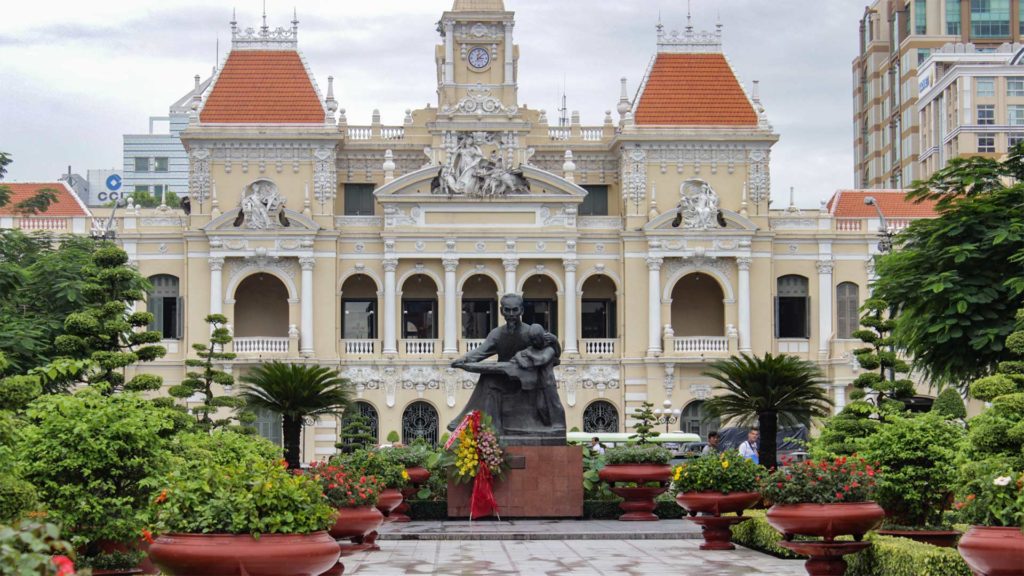
If you visit Ho Chi Minh City, I recommend the following to-dos:
- Use the Grab app for quick transportation. It gets you from A to B fast and without hassle.
- Visit the cafés and bars and get inspired by the local drinks
- Keep an eye out for good street food spots (e.g., Quan Oc)
- The Bui Vien strip is the nightlife street at night
- Explore the side streets to the left and right of the famous Nguyen Hue Street
- Get to know the culture and check out the Thien Hau Temple
If I were to describe Ho Chi Minh City in a few words, the city is a world of its own. You meet people everywhere. A touch of modernity and tradition live side by side in harmony. On one side, there are old temples and historic buildings like the Reunification Palace, which played an important role in the 20th century. On the other side, you can practically feel the city’s pulsing development through new high-rises, modern shopping malls, and other venues.
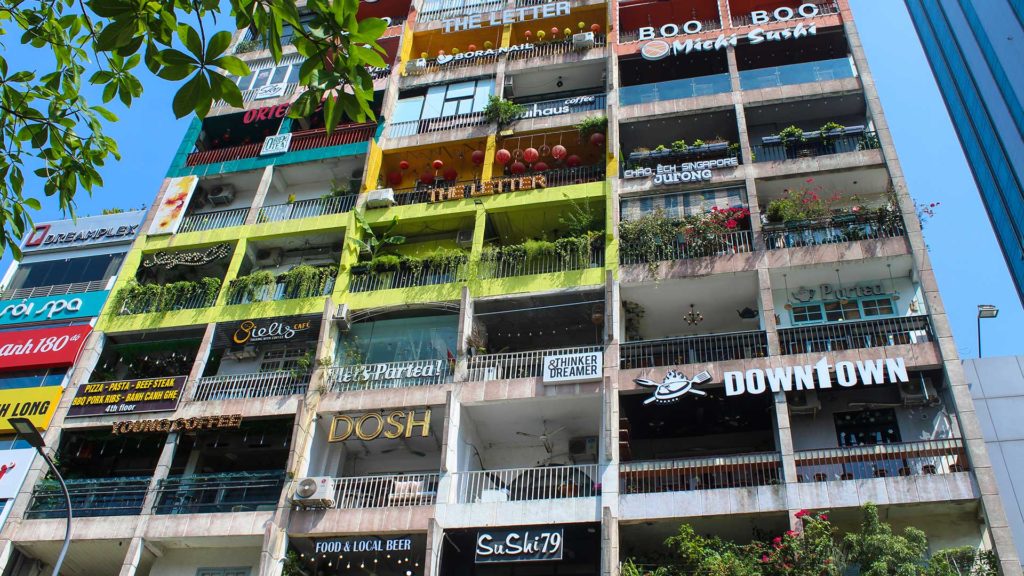
If you want to go out, Bui Vien is probably the city’s most popular and trendiest party street. Pubs, bars, clubs, and restaurants line up next to each other here. If you want to sleep quietly, you’re completely in the wrong neighborhood. The Bui Vien strip is especially popular with tourists.
If you want to see the city from above, I can highly recommend the Chill Skybar (AB Tower). Outside, you’ll find a terrace with a bar and get a great view of the city, which lights up beautifully at night in the center.
2. Bến Tre – Quieter, Cheaper, Interesting
The cheapest connection from Ho Chi Minh City to Ben Tre is by bus and costs under 10 euros. The travel time is about 3 hours. There are also minivans that take you there directly for similar prices.
When people talk about Ben Tre, they distinguish between the province and the city of Ben Tre. As a tourist, you don’t necessarily think of Ben Tre City because it isn’t in tourist guides and gets relatively little attention in travel blogs. And unfairly so, in my opinion.
Of course, Ben Tre is nowhere near as big as Ho Chi Minh City. Ben Tre and the surrounding area don’t offer many sights. And in the rural regions, by 08.00 PM it’s completely dark and absolutely silent. Still, Ben Tre has a certain charm away from mainstream tourism. The peace and quiet, the low prices, and the nature are just a few reasons to spend at least half a day there.
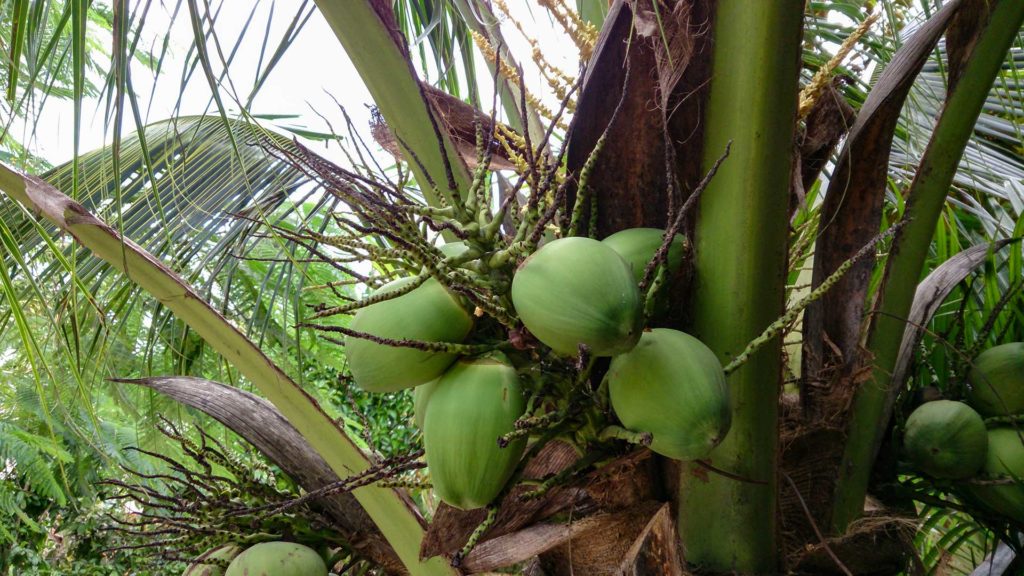
Let locals show you around town, and get to know the fruit plantations. I love fruits like coconut, durian, mangoes, dragon fruit, rambutan, nhan (longan), or vu sua (star apple). And out here in the countryside, you’ll find them in abundance. They’re much cheaper at the markets here than what you’ll see price-wise in supermarkets. Ben Tre offers boat tours along the Mekong Delta. Take advantage of these options and get to know the waterways and quiet nature in the region.
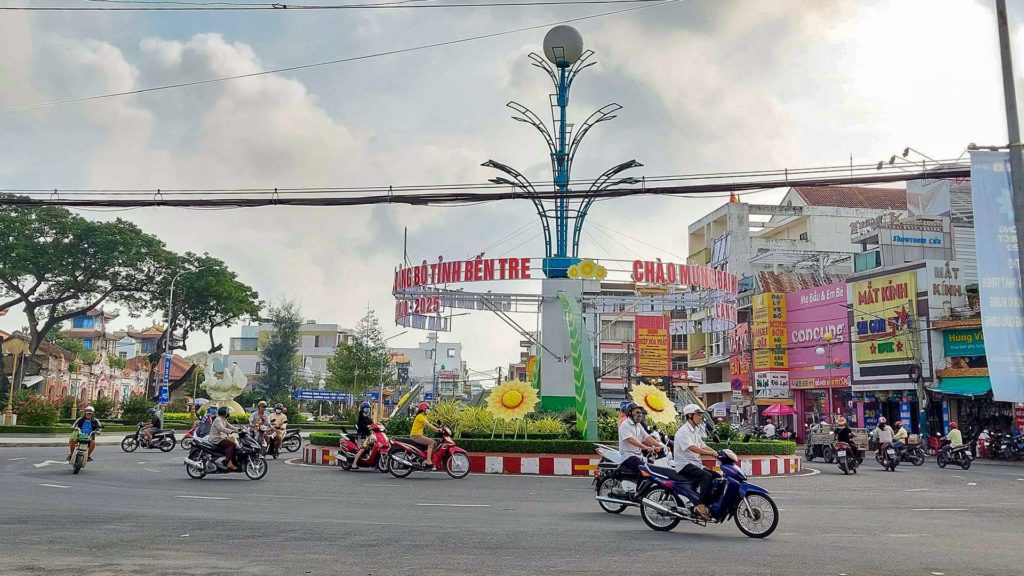
And the city also looks a bit like Saigon. Just with less traffic but plenty of opportunities to dive into the culinary delights of the local food culture. Ben Tre is only about 2-3 hours by car from Ho Chi Minh City. The city itself is worth a visit. It’s much quieter, cheaper, and because of its size, it isn’t really known for nightlife.
You’ll experience the social moments with friends more in the so-called Quan Nhau, which are similar to taverns in Europe. People meet up in a convivial group and order something to eat. There you can enjoy Vietnamese beer. At the Start Up café, you can try many tasty drinks.
The following to-dos should be on your list, in my opinion:
- Visit the Vien Minh Pagoda
- DinHo Ecotour by boat
- Relaxing at Ho Truc Giang (lake)
- Visit the markets in Ben Tre
If you have a guide who lives in Ben Tre and shows you around everywhere, that would be great. You’ll not only get to know the places, but you’ll also connect with people quickly. That way, you’ll get a sense of local life.
3. Da Lat – The Most European City in Southern Vietnam
Mild climate, mountain scenery, and a clean city with fresh air. Da Lat is unique in every way in southern Vietnam. Nowhere else in Vietnam will you see people walking through the streets at night in winter jackets. During the colonial era, the French discovered the town and its climate and adapted the architecture a bit to European standards. When you’re in the city, you quickly notice what makes Da Lat so special.
The city is located in the province of Lâm Đồng at the foot of a mountain landscape. The cooler, more pleasant temperatures feel to us Europeans like one of those warmer spring days when we walk around in T-shirts. You might even skip a face covering for dust on scooter rides because the air feels so clean. You’ll hardly find a place like this in Vietnam.
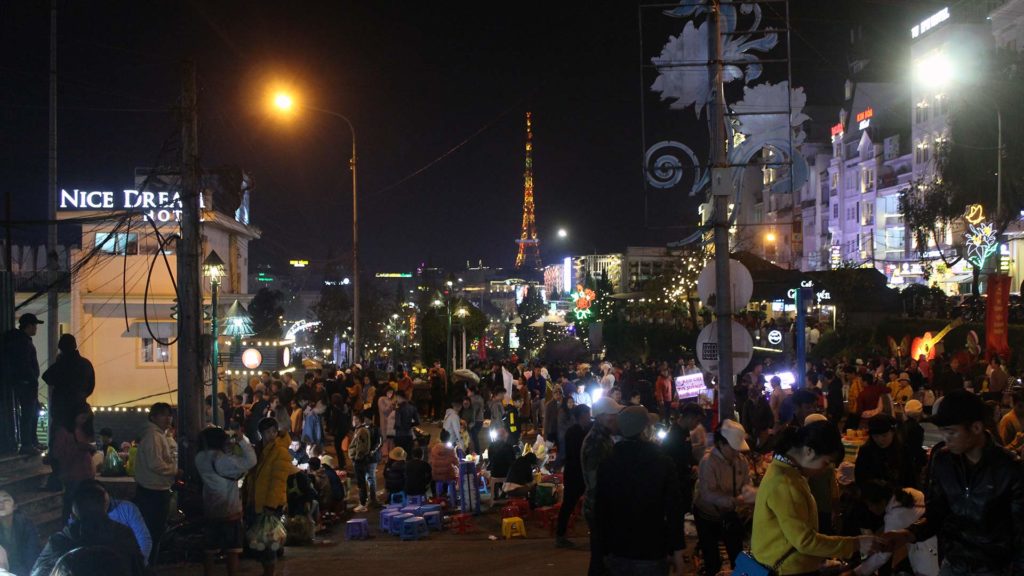
Today, Da Lat is a very popular meeting point for tourists and Vietnamese alike. The possibilities are endless.
Hotspots in Da Lat include:
- Datanla Waterfall
- Tuyen Lam Lake
- Xuan Huong Lake
- The night market in Da Lat
- Bao Dai Palace
- Da Lat Cathedral
- Van Hanh Pagoda
- Flower Gardens
- The Crazy House (Crazy House)
When it comes to food, you should take a look at the street restaurants. I especially enjoyed Lau Bo (hot pot with beef and noodles). The regional specialty Nem Nuong Ba Hung, with marinated pork eaten as a cold summer roll, is also hard to beat. Feel free to look around the market in Da Lat as well. The coffee and tea varieties owe their aroma to the region’s unique plantations and growing areas.

Da Lat doesn’t just have a beautiful city, it also has an impressive natural feature. The Datanla Waterfall is the standout. Using an alpine coaster, you ride down to the waterfalls and can adjust your speed along the way. Datanla Waterfall is a beautiful natural spectacle.
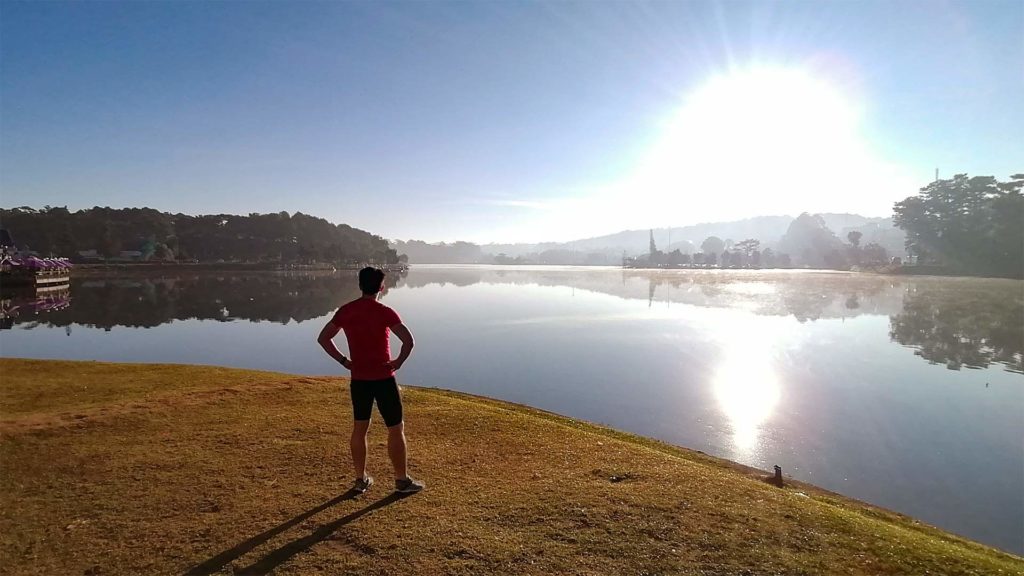
Also worth seeing is Hồ Tuyền Lâm (Tuyen Lam Lake). It’s somewhat reminiscent of a weekend trip to Lake Chiemsee or Lake Constance. A very picturesque scene in a rather quiet region with a mild climate and a slightly European flair. You rarely see anything like this in Vietnam. Xuan Huong Lake is a small lake right in the middle of the city. It’s very centrally located, and you can jog there, go for walks, and hang out and chill with friends in the evening.
4. Nha Trang – Beach Vibes in Southern Vietnam
You’ll get a true vacation feeling when you’re on the beach in Nha Trang. The long beach is characteristic of the city. If you’re planning a beach vacation in the winter months with hot temperatures, Nha Trang is a good recommendation. When I think of Nha Trang, I think of beaches, sea, seafood, and palm trees. The water is clean, and you’ll have an excellent view out into the distance as well as of the islands on the other side.
Nha Trang is also a popular place for foreign tourists, and especially here you’ll quickly notice that touristy feeling very clearly. Going from cool Da Lat to hot Nha Trang is quite an adjustment.
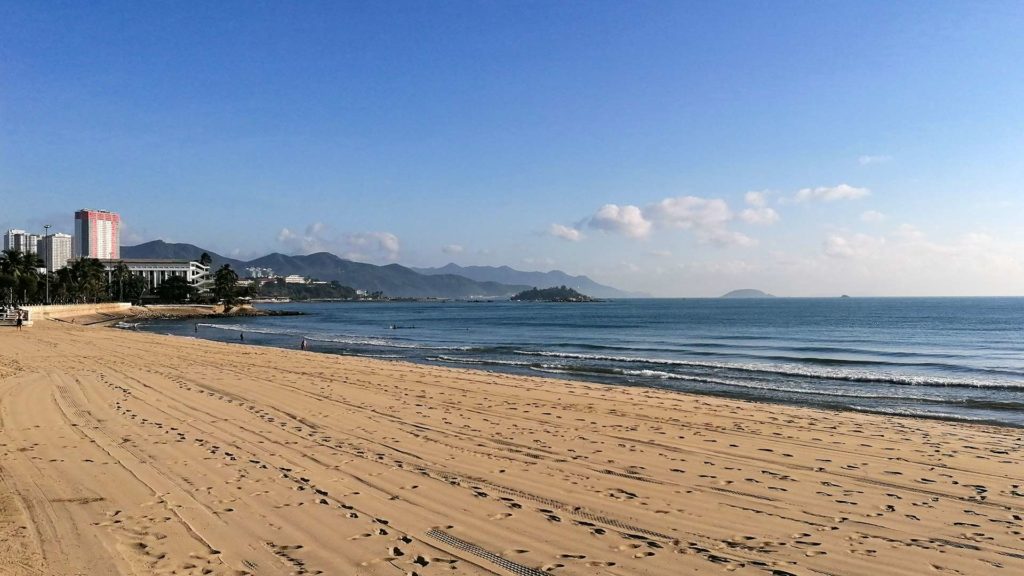
The beach in Nha Trang is about 6 km long and ideal for a walk or a jog. For breaks, you can treat yourself to snacks, cocktails, or ice cream at the outdoor cafés.
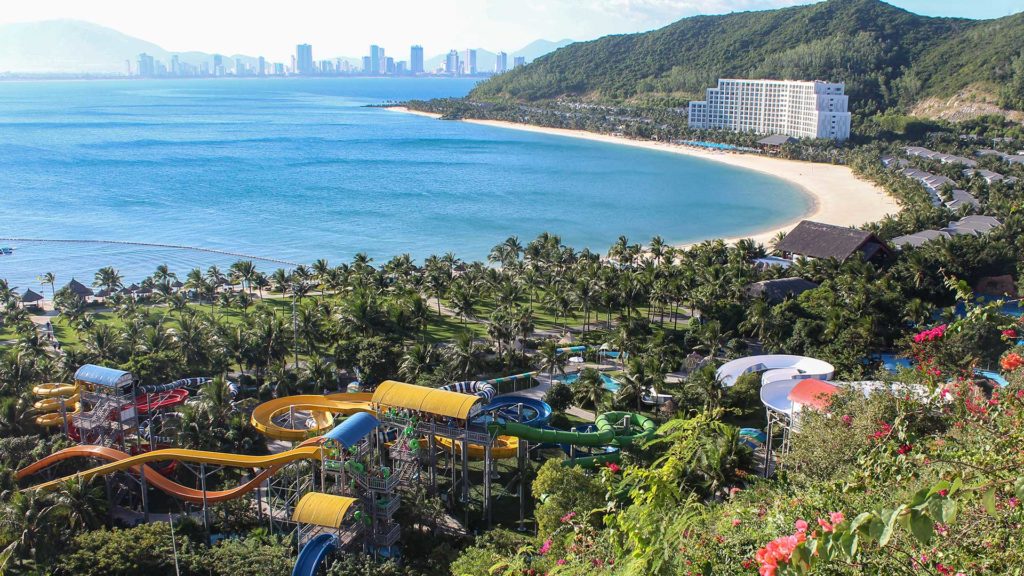
Defining the city of Nha Trang is the amusement park Vinpearl Land. This is definitely a full-day trip for the whole family. At just under 30 euros admission, it’s a fairly steep price, and accordingly you can expect quite a lot from an amusement park. I don’t find the rides all that spectacular, and the attractions don’t exactly blow you away. But the landscaped grounds with the animals, the Japanese garden, and the created beach make up for it. The aquarium at Vinpearl Land is also impressive. Overall, it’s a nice amusement park for young and old.
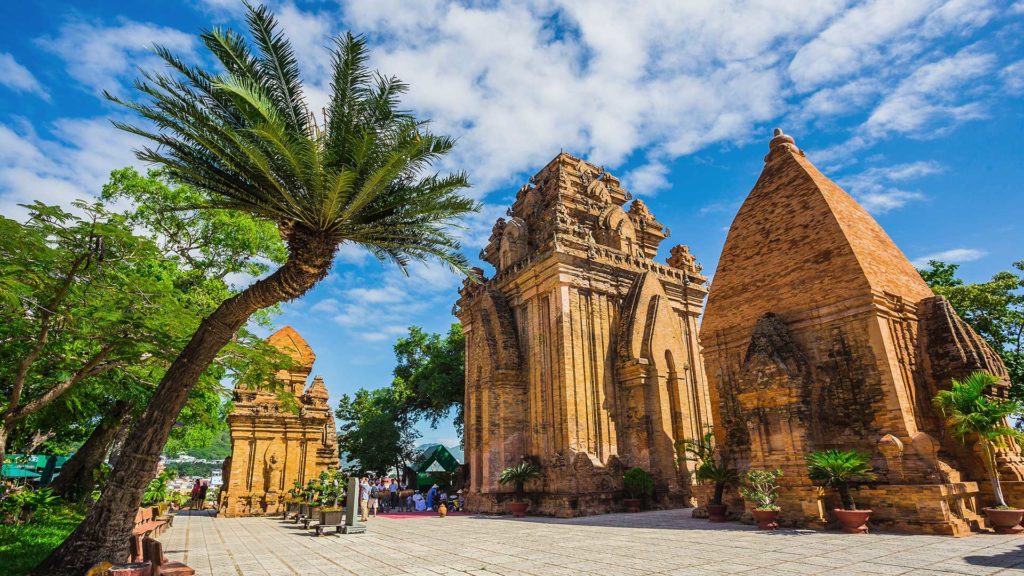
If you’re interested in historic architecture, you should visit Po Nagar. It’s a Hindu temple complex, and you’ll dive into its venerable history. Po Nagar was built in the 8th century and attracts many international tourists today. It’s relatively manageable in size, and you’ll spend a maximum of 1-2 hours here.
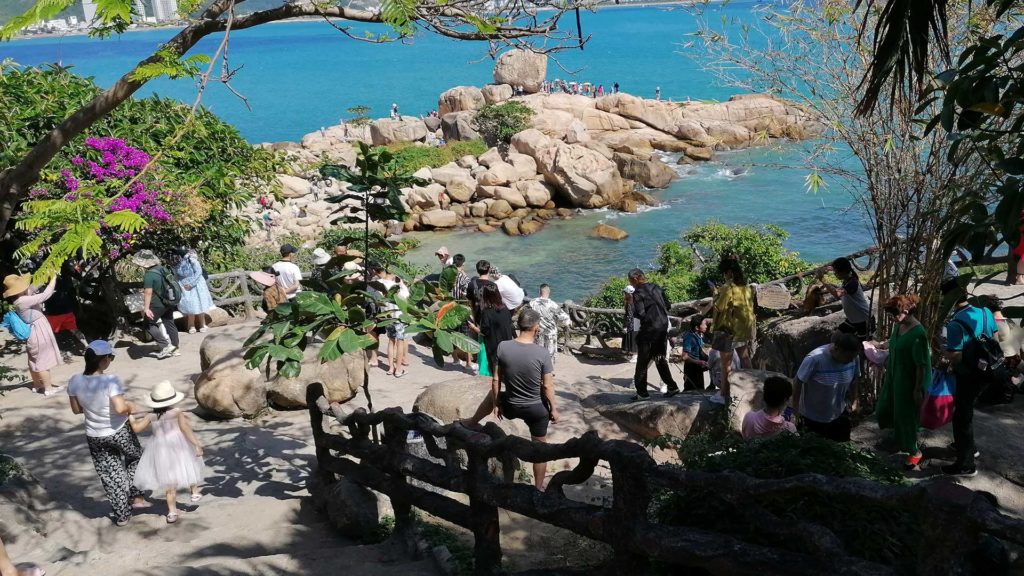
The coastal landscape Hon Chong is another highlight you should add to your to-do list. It’s a rocky promontory, and from the rocks you’ll have a wonderful view out over the sea. The promenade is also great for a walk.
Southern Vietnam has many sights waiting to be discovered.
This article only presents a small selection of cities in southern Vietnam. But you’ve surely been inspired by the exciting sights and tourist destinations, and at some point you’ll take a short trip to southern Vietnam, where you’ll make these and many other discoveries.

About the Author
I’m a blogger, photographer, freelancer, and world traveler. On my trips, you’ll often see me in Australia and Southeast Asia. As a Vietnam expert, I recommend the most beautiful places. Let my blog at www.welt-sehen.de inspire you, too.
Have you ever been to southern Vietnam? Where did you like it best? Write your opinion about southern Vietnam in the comments.
Photos: Photo 10 (Po Nagar): Zhukov Oleg/shutterstock.com
